Japan
Cash still matters, and silence is a form of politeness.
Most asked
Do you tip in Japan?
No. Tipping is not expected, and money left behind is usually treated as forgotten, not as a gift.
Read the answerAt a glance
- Tipping
- Not expected
- Cards
- Cities yes, small shops cash
- Tap water
- Safe to drink
- Haggling
- Not done
Arriving
The first hour — getting out of the airport and into the city.

How do you get from the airport into the city?
By train, nearly always. Which train depends on the airport and on which side of the city you are sleeping.

Narita or Haneda — does it matter which one you land at?
By about an hour, yes. Haneda sits inside Tokyo; Narita is in the next prefecture.

Can you send your suitcase to the hotel instead of carrying it?
Yes. Counters in the arrivals hall will forward a suitcase to your hotel, usually arriving the next day.

Where can I leave my luggage for the day?
Two separate systems: coin lockers you work yourself, and staffed counters that will hold a bag for up to two weeks.

Can I take a large suitcase on the shinkansen?
Yes, but once the three sides added together pass 160cm you have to reserve the space in advance.
Getting around
Tapping through gates, finding a taxi, and the parts nobody explains.

Do I need to buy a ticket for every train ride?
No. One rechargeable IC card taps you through almost every train, subway and bus in the country.

How do you get a taxi in Japan?
Raise a hand at any vacant taxi, or queue at a station rank. A red sign in the windscreen means it is free.

What do I do if the ticket gate won't open?
Use the fare adjustment machine inside the gates to top up in cash, or take it to the staffed gate beside them.

Why is nobody talking on the train?
Phone calls are what is being avoided, not conversation. Keep the phone on silent, and on a long-distance train take the call between cars.

Why did the taxi door open by itself?
The driver opened it. The rear kerbside door is worked from the front seat — stand back and let it swing.
Money
What to carry, where cards stop working, and how to top up.

Do you need cash in Japan?
Yes. Cards work in cities, but small restaurants, shrines, and rural transport are cash only.

Where can I get cash with a foreign card?
A convenience store ATM. They take overseas cards, run around the clock, and there are tens of thousands of them.
Can you haggle over prices?
No. The marked price is the price, and asking for a discount will be met with polite confusion.

Why do I end up with so many coins, and what do I do with them?
Because prices are not rounded and the coinage runs high in value. Dump them into an IC card top-up machine rather than carrying them.
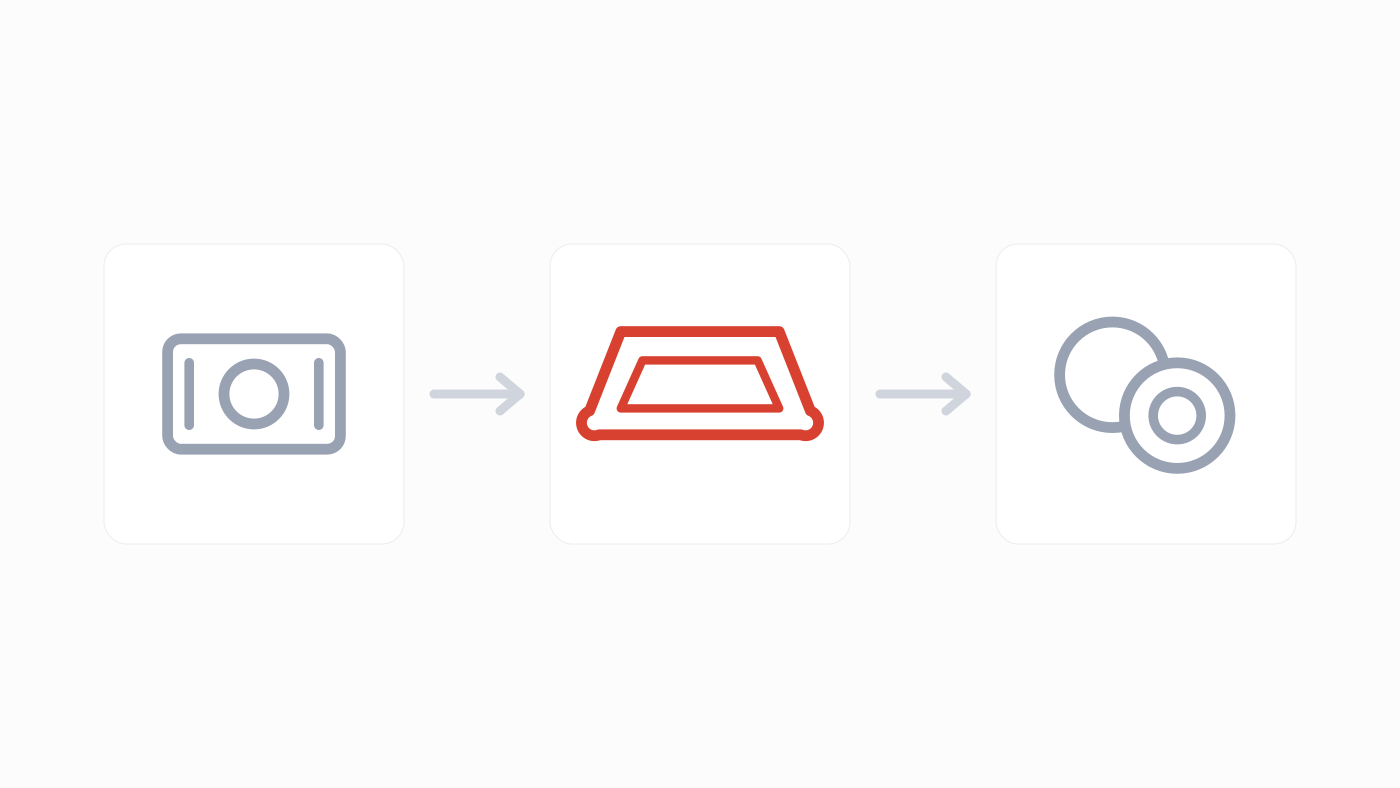
Why is there a small tray next to the register?
That is where money goes, in both directions. Put your cash and card in the tray rather than into the cashier's hand.
At restaurants
Ordering, paying, and the small rituals that are easy to get wrong.

Do you tip in Japan?
No. Tipping is not expected, and money left behind is usually treated as forgotten, not as a gift.
Is it rude to slurp noodles?
The opposite. Slurping is the expected way to eat noodles here, and eating them silently is the odd thing.

Can I eat vegetarian or vegan here?
Yes, but it takes planning. The problem is not visible meat — it is fish stock hidden in things that look plant-based.

How do ticket machines at ramen shops work?
Pay at the machine first, then hand the printed ticket to the staff.

Do I eat sushi with chopsticks or with my hands?
Either. Hands are entirely correct for nigiri, and at a counter they are arguably the better tool.
Phone and internet
Getting online, and what a tourist data plan quietly does not include.
Everyday basics
The small logistics that decide whether a day out goes smoothly.

Can you drink the tap water in Japan?
Yes, anywhere in the country — including from the drinking fountains in stations and parks.

Are public toilets free, and where do I find one?
Free, everywhere, and clean. Stations, parks, convenience stores and department stores all have one.
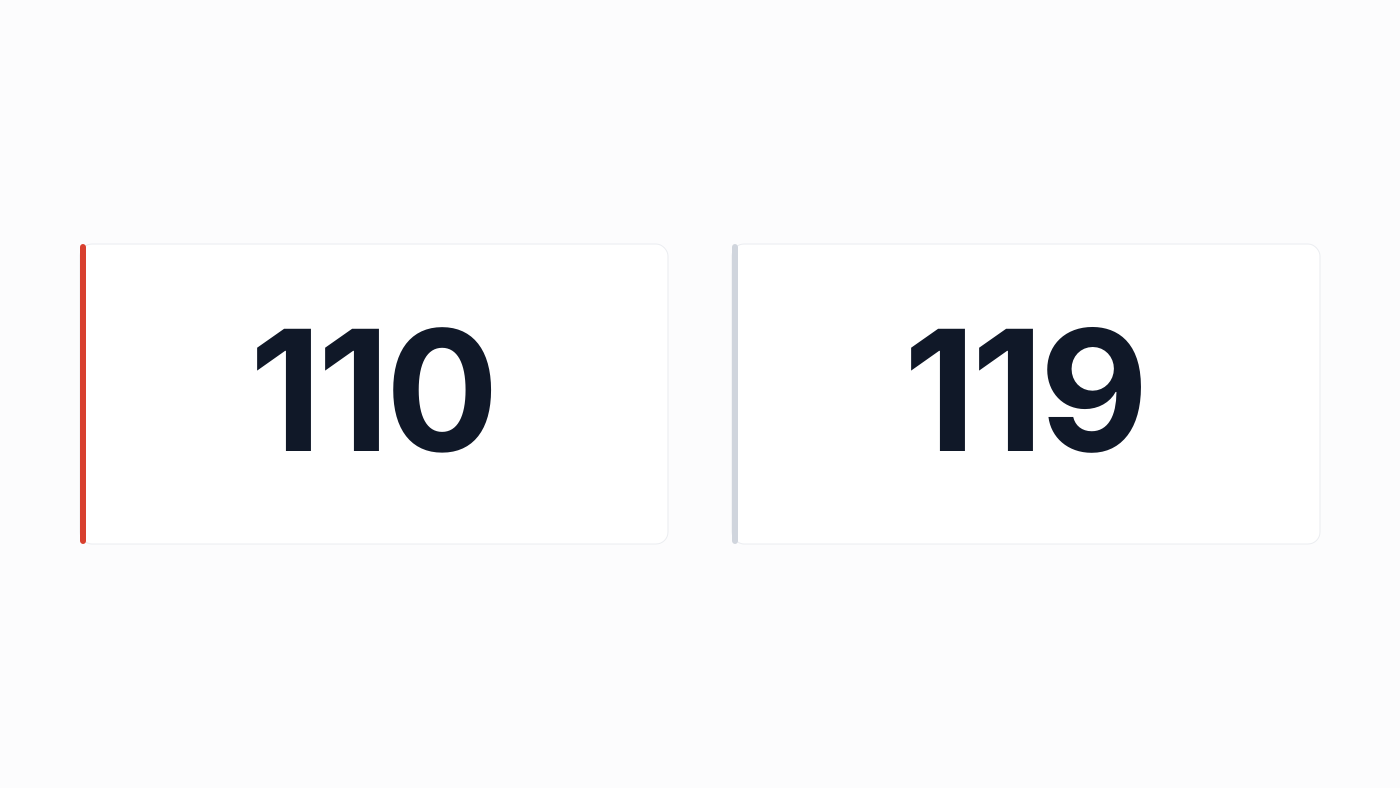
What number do I call in an emergency?
110 for police, 119 for fire or ambulance. Both are free and work from any phone.

Do I need a plug adapter, and will my charger work?
Japan runs on 100 volts — the lowest mains voltage anywhere. Most chargers cope; anything with a heating element or a motor often does not.

Where can I smoke, and where can't I?
It is the reverse of what most visitors expect: indoors is generally banned, and so is smoking while walking outdoors. You look for a designated area.

Can I use an onsen if I have tattoos?
Often not, and it is the venue's call: many pools, baths, hot springs and gyms refuse tattooed guests, while some accept them covered.
Do I have to carry my passport around?
Yes — visitors are expected to carry the passport itself at all times as identification. A photo of it is not the document.
How other countries compare
The same question, answered for every country on the site.
- How do you get from the airport into the city?
- Narita or Haneda — does it matter which one you land at?
- Can you send your suitcase to the hotel instead of carrying it?
- Where can I leave my luggage for the day?
- Can I take a large suitcase on the shinkansen?
- Do I need to buy a ticket for every train ride?
- How do you get a taxi in Japan?
- What do I do if the ticket gate won't open?
- Why is nobody talking on the train?
- Do you need cash in Japan?
- Where can I get cash with a foreign card?
- Can you haggle over prices?
- Do you tip in Japan?
- Can I eat vegetarian or vegan here?
- Can I use my own phone in Japan?
- Can you drink the tap water in Japan?
- Are public toilets free, and where do I find one?
- What number do I call in an emergency?
- Do I need a plug adapter, and will my charger work?
- Where can I smoke, and where can't I?