Can you haggle over prices?
Short answer
In markets and casual shops, yes — the tourism board's own word for it is gentle negotiation. Ask a few vendors first so you know what the number should be.

Where it applies
Bargaining is a common practice in casual shopping hubs and markets, and in areas that see a lot of tourists a price reduction is usually available through some gentle negotiation. Those two words — gentle negotiation — are the tourism board's own framing, and they set the register.
The contrast is with everything that already has a printed price: hotels, restaurants, supermarkets, chain stores. There the number is the number, and treating it as an opening bid reads badly.
Do the research first
The official advice is practical: browse and ask at a few shops or vendors to get a general sense of the price before you settle on anything. Five minutes of asking turns a guess into a reference point.
That is the whole skill. Haggling without knowing the range is theatre; haggling from a reference point is a short, friendly conversation that ends with both sides content.
The tone that works
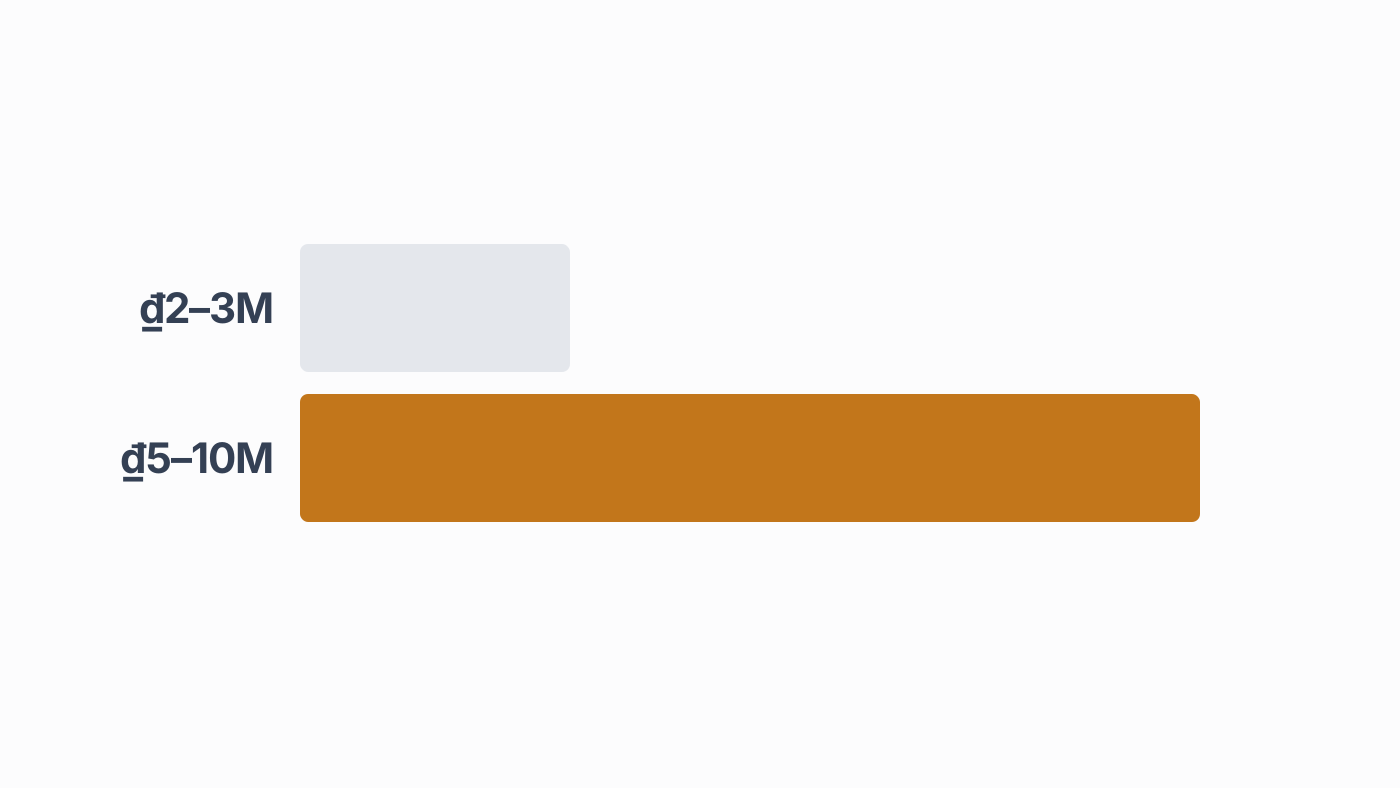
Gentle means smiling, unhurried and willing to walk on without resentment. A vendor who does not move on price has not wronged you, and pushing hard for a difference of a few thousand dong costs more goodwill than it saves money.
It pairs with the wider etiquette here: avoid making a scene or shaming anyone publicly. A negotiation that stays warm is one both people enjoy — and that, more than the discount, is the point of the exchange.
Good to know
- Printed prices are fixed — markets and street stalls are where it applies
- Ask two or three vendors before settling, to get a reference point
- Walking away without resentment is part of the etiquette

 No. The marked price is the price, and asking for a discount will be met with polite confusion.
 Not where a price tag hangs — marked prices are a legal requirement, and the tag is a ceiling. Markets without tags are a different world.
 Only in traditional markets, and only gently. Everywhere else the price is fixed and asking reads as odd.